


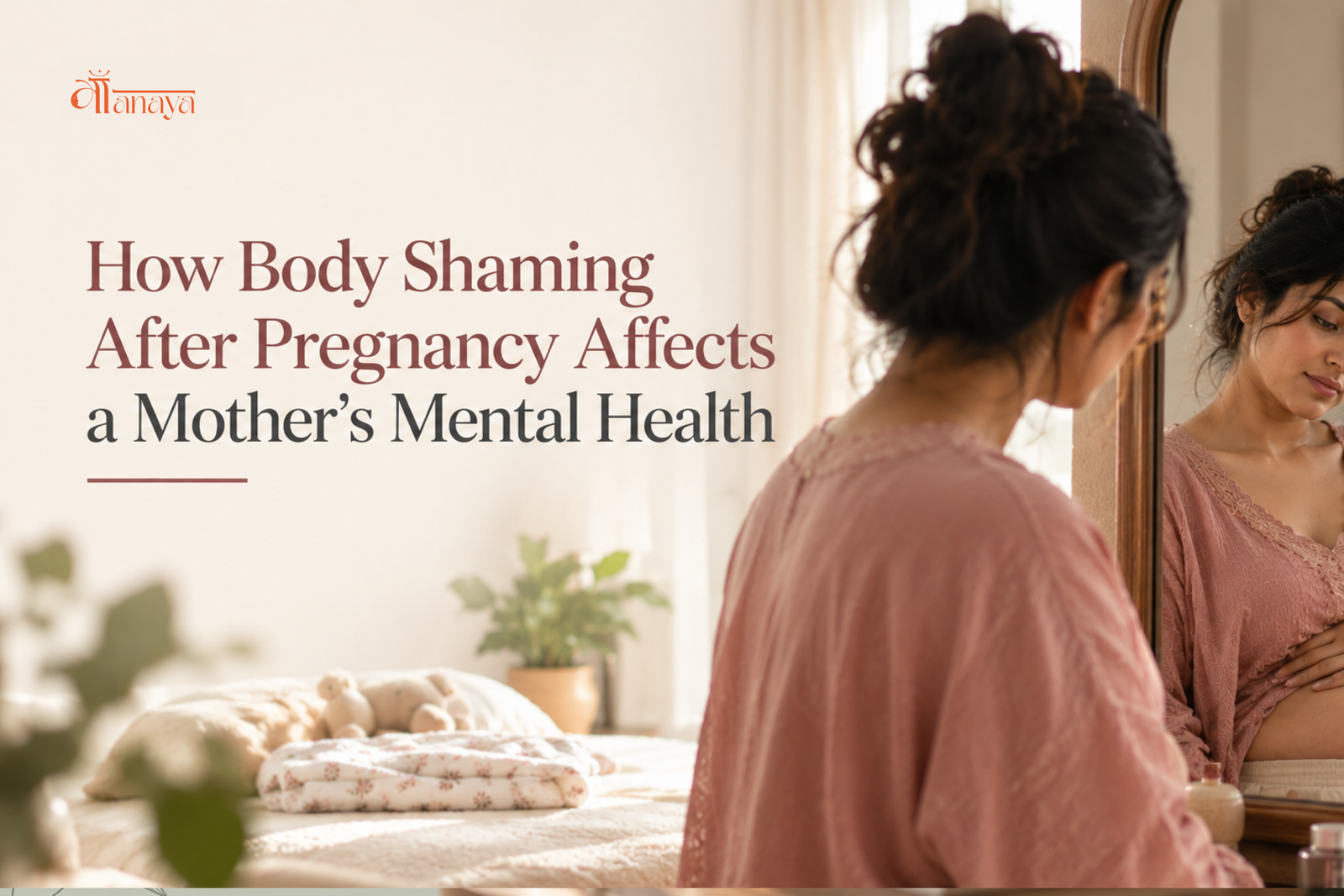
Postpartum body shaming can affect a new mother’s mental health. Learn the warning signs, why it hurts, and gentle steps to recover and find support.
Key Takeaways
- Postpartum body image is how you see and feel about your body after childbirth. Struggling with it is common, not vain.
- Research finds that body dissatisfaction after birth is associated with more depressive symptoms. These studies show a link, not proof that body shaming causes depression, but shaming can add to a mother’s distress.
- Healing starts with changing what you hear, what you see and how you talk to yourself. You can reach out for professional support whenever something worries you. You do not have to wait.
Imagine this: three weeks after delivery, a relative looks at you and says, “Arre, you’ve put on so much weight.” Nobody asks how you slept or whether you are eating. Just your belly, your stretch marks, your size.
If that feels familiar, you are not being sensitive. Postpartum body image, the way you see and feel about your body after childbirth, can affect your mood, your confidence and how at ease you feel in your own skin. Research links body dissatisfaction after birth with more depressive symptoms, and body shaming after pregnancy can add to that distress.
This guide is for new mothers, and for the partners and families who want to help. You will learn what body shaming looks like, how it can affect mental health, and what actually helps.
What Is Postpartum Body Image, and Why Does It Shift After Birth?
Postpartum body image is the picture you hold of your body in the months after delivery, plus the feelings attached to it. It goes beyond weight. It includes your belly, breasts, scars, skin, hair and how strong or exhausted your body feels.
The changes nobody warns you about
A softer abdomen, stretch marks, a C-section or episiotomy scar, hair fall and weight that does not move on anyone’s schedule are all common. Many of these changes ease over time, but they rarely follow a family’s timeline.
Why your mind reacts so strongly
Sleep loss, hormone shifts and a new identity can make you more sensitive to criticism. A 2021 study in the journal Midwifery tested whether social media use is linked to postpartum body dissatisfaction through appearance comparison and internalising a “thin ideal.”

What Counts as Body Shaming After Pregnancy?
Body shaming after pregnancy is any comment, joke or comparison that tells a mother her postpartum body is wrong, ugly or a problem to fix. It does not have to be cruel to hurt. It often arrives disguised as concern.
Comments from family and community
“You have let yourself go.” “When will you lose the baby weight?” “Your cousin was back in her jeans in a month.” Even kind advice, like “Start dieting now or it will never go,” can land as criticism when you are sleep-deprived and healing.
Social media and the “bounce back” myth
A 2022 content analysis of 600 Instagram images tagged #postpartumbody found that, of the 409 images showing a woman, 91% featured low or average body fat. The images were captured at a single point in time, and the authors noted this kind of content could reduce body satisfaction for some viewers. What you see online may not reflect the full range of real postpartum bodies.
The voice in your own head
Self-shaming can be just as powerful. A 2022 survey of 306 postpartum women, published in the journal Body Image, found they compared their current bodies with their pre-pregnancy selves more often than with anyone else. Comparing bodies and eating habits was linked to disordered eating patterns.

How Body Shaming Can Affect a Mother’s Mental Health
Body shaming can reach into mood, sleep, eating and relationships. The research below shows associations, not proof of cause. These studies cannot show that body dissatisfaction or shaming leads to depression, only that the two tend to appear together. Postpartum depression usually has several contributors, and shaming is one possible addition to that load.
Link with postpartum depressive symptoms
In a 2022 study of 450 women from two hospitals in Andalusia, Spain, women who were more dissatisfied with their bodies six months after birth tended to have more depressive symptoms on the Edinburgh Postnatal Depression Scale (EPDS), a screening questionnaire rather than a diagnosis.
A cross-sectional study of 330 postpartum women assessed at 4 to 6 weeks after delivery found a similar association between body dissatisfaction and depressive symptoms. In that sample, 40% had depressive symptoms on the screening scale and 12.1% reported thoughts of self-harm. The authors flagged a limitation: women who skipped routine postpartum visits because of emotional distress may be missing from the sample. Because the study looked at one group at one point in time, these figures cannot be read as rates for all mothers, and they do not show what caused the symptoms. Education level, delivery method and satisfaction with specific body areas were among the factors linked to depressive symptoms.
Not sure whether what you feel is passing sadness or something more? Read our guide on baby blues vs postpartum depression.
Anxiety, withdrawal and isolation
Some mothers start avoiding mirrors, photos, family functions and intimacy. Skipping those moments can feel protective, but isolation can feed low mood. Constant worry about how you look can also sit alongside postpartum anxiety, which is easy to miss.
Restrictive eating and over-exercising
The pressure to “bounce back” can push some mothers toward crash diets or punishing workouts while their bodies are still healing and, for many, feeding a baby. Under-eating can drain energy and mood. Our guide on how nutrition supports physical and emotional recovery after childbirth explains why nourishment helps both.
Strained bonding and confidence
Shame can make a mother avoid photos with her baby or hesitate to feed in front of others. Read more on breastfeeding and mental health. If a scar or stretch marks bring back a frightening delivery, that may be birth trauma rather than body image alone.
The Added Pressure Many Indian Mothers Face
A WHO Bulletin systematic review and meta-analysis pooled 38 studies covering 20,043 women in India (studies published from 2000 to March 2016) and estimated postpartum depression prevalence at 22% (95% CI: 19–25). This is a pooled estimate across studies that used different methods and settings, not a current rate that applies to every Indian mother. The reported risk factors included financial difficulties, domestic violence, past psychiatric illness, marital conflict, lack of support from the husband and the birth of a female baby. The review did not study body shaming, but body-focused comments can add to a load many mothers already carry.
Culture can play a role too. In some homes, a new mother is fed rich, ghee-heavy foods to recover, then criticised for the weight that follows. Her own needs often come last, a pattern we explore in why Indian moms struggle to receive care.
A fictional example: Meera is an imagined character, created to show how body shame can look. She is not a real patient, and her story is not a diagnosis. Four months after her C-section, she skips a cousin’s wedding because nothing fits and relatives keep remarking on her stomach. She calls it tiredness. But she is crying over old photos, sleeping poorly and eating little. What looks like shyness may be body shame, and her low mood, poor sleep and reduced eating are worth raising with a doctor or counsellor. Only a qualified professional can say what is really going on.
Warning Signs It May Be More Than a Bad Body Day
Some of these feelings are common and often pass. Others are a signal to reach out. This table is a guide, not a diagnosis.
| Common and often passing | Worth talking to a professional about |
|---|---|
| Feeling unhappy with your body on some days | Disliking your body most days, or feelings that keep getting stronger |
| Wishing your clothes fit better | Avoiding mirrors, photos, outings or intimacy |
| Wanting to eat more healthily | Skipping meals, extreme dieting or over-exercising |
| A few tearful days soon after birth | Ongoing low mood, panic, hopelessness or thoughts of self-harm |
You do not need to wait for symptoms to reach a certain point or last a set length of time. If something worries you, you can ask for support now.
You can also take the Maaanaya mental health screening. It is a starting point for a conversation with a professional, not a diagnosis.
How to Rebuild Your Postpartum Body Image
Small, repeatable steps work better than a big mindset overhaul.
1. Describe what your body did
Swap “I look terrible” for “My body carried and fed my baby.” It feels forced at first. Repetition can make it believable.
2. Clean up your feed
Mute or unfollow accounts that make you feel behind. Follow mothers who show real postpartum bodies. Set a daily scroll limit.
3. Use ready-made boundary lines
Try: “I’m focusing on healing, so please don’t comment on my weight.” Or: “I know you care. Asking how I’m sleeping would help more.”
4. Check before you start exercising
Speak to your doctor or midwife before you resume exercise. This matters most after a C-section, a tear or episiotomy, or a complicated delivery, when the right timing and type of movement depend on how you are healing. Once you are cleared, aim for better energy and mood rather than calorie burn.
5. Eat to recover
Regular, balanced meals support healing and mood, and crash diets work against both. If you are breastfeeding, talk to your doctor or a dietitian before changing how you eat.
6. Find your people
Talking to mothers who feel the same can ease the shame. Maaanaya’s support groups for moms and workshops and webinars offer that space.
How Partners and Family Can Help
- Stop commenting on her weight or shape, even as a joke.
- Ask “How are you feeling?” before anything else.
- Take over night feeds or chores so she can rest.
- Praise what she does, not only how she looks.
- Notice withdrawal, and gently suggest support.
Practical support matters. The WHO Bulletin review above lists lack of support from the husband among the reported risk factors for postpartum depression in Indian mothers.

When to Seek Professional Help
You can reach out at any time. You do not have to be sure it is “serious enough.” It is especially worth seeking support if body worries affect your eating or sleep, keep you from your baby or daily life, or come with low mood, anxiety or hopelessness. If you have thoughts of harming yourself, use the emergency numbers above straight away.
Maaanaya offers individual therapy and counselling, psychiatric support and online and in-person sessions. You can meet the providers on our care team page, start with the screening, or contact us.
Frequently Asked Questions
Is it normal to hate your body after pregnancy?
Yes, it is common. Research describes the postpartum period as a time when many women are least satisfied with their bodies. Occasional dislike is normal. If the feelings are strong or constant, or they affect your eating, sleep, mood or bonding, speak to a professional. You do not need to wait.
How long does it take to feel comfortable in your postpartum body?
There is no fixed timeline. Physical recovery and body image both vary with delivery type, sleep, feeding and support. Many mothers need several months, and some longer. Progress matters more than speed, and professional support can make the hard stretch easier.
Can body shaming cause postpartum depression?
Body shaming has not been shown to cause postpartum depression on its own. Studies link body dissatisfaction with more depressive symptoms after birth, but they show association, not cause. Depression usually has several contributors, including hormones, sleep loss, mental health history and support at home. Shaming can add to that load.
How do I respond when relatives comment on my weight?
Keep it short and calm: “I’m focusing on recovery right now, so I’d rather not discuss my weight.” Repeat it if needed, and ask your partner to back you up. You do not owe anyone an explanation of your body.
When should I see a doctor about postpartum body image issues?
Whenever something worries you, such as low mood, anxiety, extreme dieting or avoiding people and places. If you have thoughts of harming yourself, seek urgent help straight away.
Conclusion: Your Next Steps
Postpartum body image struggles are common, and body shaming after pregnancy can turn a tender recovery into a source of shame. Research links body dissatisfaction with depressive symptoms, anxiety and unhealthy eating patterns. These studies show association, not cause, but they point to the same answer: support, not willpower.
- Notice who and what makes you feel judged, and limit it.
- Use one boundary line this week.
- Eat regularly, and check with your doctor before you start exercising.
- Reach out whenever something worries you. You do not have to wait.
You deserve care that looks at how you feel, not just how you look. Take the Maaanaya screening or book a session today.
Medical disclaimer: This article is for education only and is not medical advice, diagnosis or treatment. Please consult a qualified healthcare provider about your health.
