



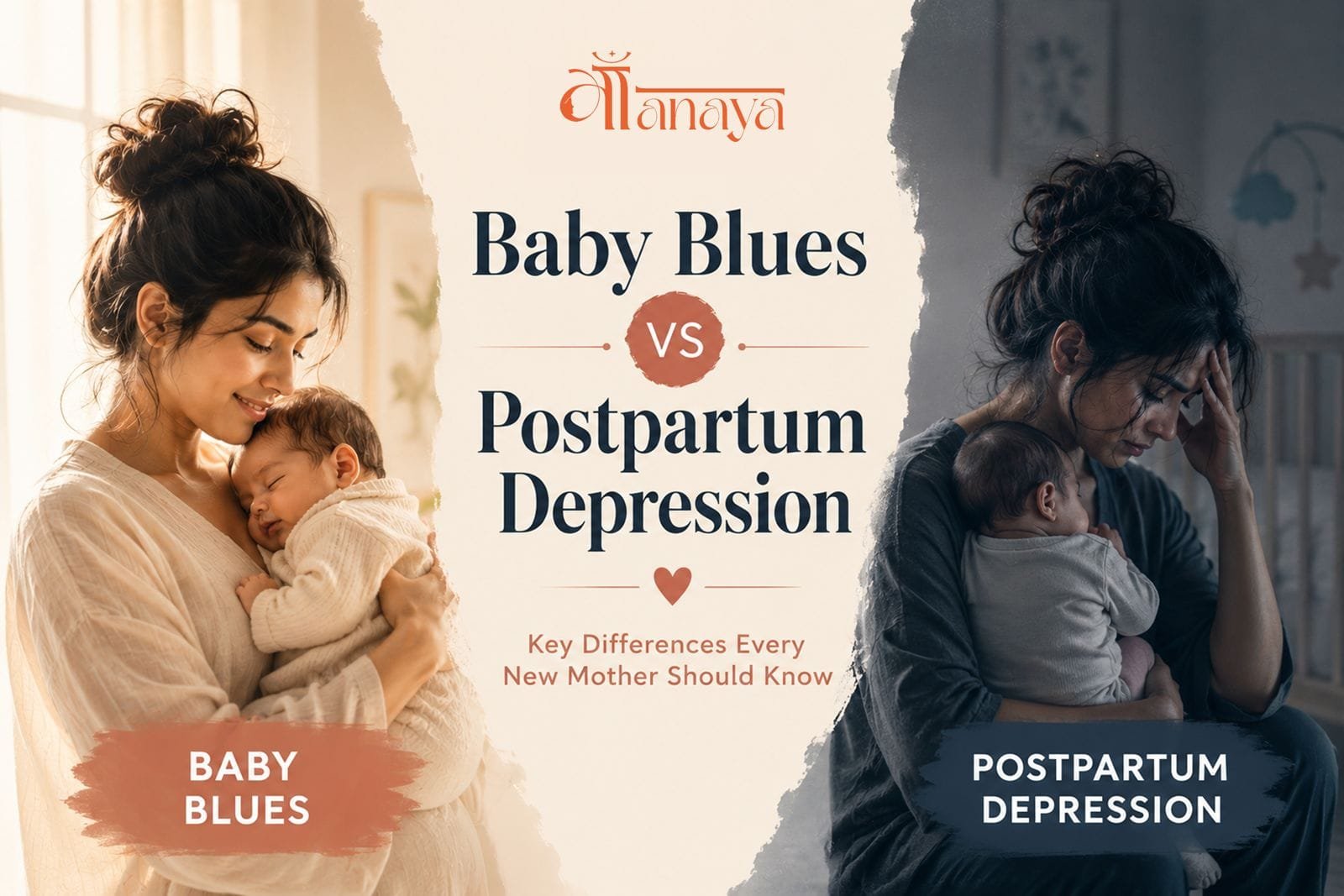
Confused between baby blues vs postpartum depression? Learn the clear differences, symptoms, timelines, and when to seek help — expert support available at Maaanaya.
Introduction
Bringing a new life into the world is one of the most transformative experiences a woman can go through — and one of the most emotionally complex. If you’ve recently given birth and found yourself crying for no clear reason, feeling exhausted beyond words, or struggling to connect with your baby, you are not alone.
The conversation around baby blues vs postpartum depression is one that every new mother deserves to have — clearly, honestly, and without stigma. These are two distinct emotional experiences after childbirth, and knowing the difference can be the first step toward getting the right support at the right time.
At MaaanayaHome – maaanaya.com we believe that no mother should have to navigate the postpartum period without guidance. This blog will walk you through everything you need to know — the symptoms, timelines, causes, and when professional support becomes essential.
What Are the Baby Blues?
The baby blues are a common, short-lived emotional response to childbirth that affects an estimated 60–80% of new mothers worldwide. They typically begin within the first two to three days after delivery and are closely linked to the sudden hormonal changes that occur once the placenta is delivered.
During pregnancy, your body maintains elevated levels of estrogen and progesterone. After delivery, these hormones drop sharply — sometimes within 24 hours. This rapid hormonal shift can trigger mood swings, tearfulness, and emotional sensitivity even when everything in your life seems objectively fine.
Baby blues are considered a **normal physiological response** to childbirth — not a mental health disorder. They do not require clinical treatment and typically resolve on their own within two weeks with rest, emotional support, and care.
Common signs of baby blues include:
- Sudden crying spells without a clear reason
- Irritability or mood swings
- Feeling overwhelmed or anxious
- Trouble sleeping even when the baby is asleep
- Feeling mildly disconnected from your newborn
- Lack of concentration or forgetfulness
These feelings, while uncomfortable, tend to come and go throughout the day and do not severely impair your ability to care for yourself or your baby.
What Is Postpartum Depression?
Postpartum depression (PPD) is a clinically recognised mood disorder that affects approximately 1 in 7 new mothers globally. Unlike baby blues, PPD is not simply a response to hormonal changes — it is a complex condition involving biological, psychological, and social factors.
PPD can emerge anytime within the first year after childbirth though it most commonly develops within the first four to six weeks postpartum. It is not a sign of weakness, poor parenting, or a lack of love for your child. It is a medical condition that responds well to professional treatment — therapy, structured emotional support, and in some cases, medication.
Postpartum depression symptoms are more persistent, more intense, and significantly more disruptive to daily life than baby blues. A mother experiencing PPD may find it difficult to get out of bed, bond with her baby, or perform everyday tasks.
Common postpartum depression symptoms include:
- Deep, persistent sadness or emotional numbness
- Severe anxiety or panic attacks
- Feeling like a “bad mother” or experiencing intense guilt
- Loss of interest in activities you once enjoyed
- Withdrawing from family, friends, or your partner
- Intrusive thoughts about harming yourself or your baby
- Feeling disconnected from reality or detached from your infant
- Changes in appetite — eating too little or too much
- Physical symptoms such as headaches, chest tightness, or fatigue
If these symptoms last longer than two weeks or worsen over time, seeking professional support is not optional — it is necessary.
Baby Blues vs Postpartum Depression: A Side-by-Side Comparison
Understanding baby blues vs postpartum depression becomes much clearer when you compare them directly.
| Feature | Baby Blues | Postpartum Depression |
| Onset | 2–3 days after birth | Within 4 weeks to 1 year after birth |
| Duration | Up to 2 weeks | Weeks to months if untreated |
| Intensity | Mild to moderate | Moderate to severe |
| Affects daily function? | Rarely | Yes, significantly |
| Bonding with baby | Mildly affected | Often significantly impaired |
| Prevalence | 60–80% of new mothers | ~15% of new mothers |
| Treatment needed? | Usually not | Yes — therapy and/or medical support |
| Cause | Hormonal fluctuation | Hormonal, psychological, social factors |
| Anxiety level | Mild, occasional | Persistent, sometimes severe |
| Intrusive thoughts | Rare | Can occur — seek help immediately |
This comparison makes one thing clear: **baby blues are temporary and self-limiting, while postpartum depression requires professional intervention.**
Symptoms in Detail
- Emotional Symptoms
Both conditions involve tearfulness and emotional sensitivity — but the emotional experience of PPD is far more engulfing. A mother with baby blues may cry while watching a commercial and feel better an hour later. A mother with PPD may feel a persistent heaviness that doesn’t lift, accompanied by deep-rooted feelings of failure, hopelessness, or worthlessness.
- Physical Symptoms
Baby blues rarely affect physical health beyond tiredness. PPD, however, can manifest physically — through appetite changes, unexplained aches, disrupted sleep that goes beyond newborn feeding schedules, and chronic fatigue that rest does not relieve.
- Relationship and Bonding
The ability to bond with your newborn is often a telling factor. Mothers with baby blues typically bond normally, even through emotional fluctuations. In PPD, mothers may feel emotionally disconnected from their child, experience guilt about this disconnection, and withdraw from partners or support systems.
- Anxiety and Intrusive Thoughts
Postpartum anxiety — which can co-exist with or occur independently of PPD — is characterised by racing thoughts, constant worry, and physical tension. Intrusive thoughts (disturbing thoughts about harm coming to the baby, though these are ego-dystonic and not acted upon) are more commonly associated with PPD and postpartum OCD, and should always be discussed with a mental health professional.

How Long Do Baby Blues Last vs PPD?
Baby blues almost always resolve within 10–14 days of childbirth. If you are experiencing emotional difficulty and it has been fewer than two weeks since delivery, there is a reasonable chance your body is simply adjusting to its new hormonal baseline.
Postpartum depression does not follow this timeline. Without appropriate support, PPD can persist for months or even longer. Some mothers experience PPD that transitions into longer-term depression or anxiety disorders if left unaddressed.
This is why the two-week marker is so important to watch. If emotional difficulty persists beyond two weeks postpartum — or worsens at any point — it is time to seek professional guidance.
Causes and Risk Factors
Baby Blues: Why They Happen
The primary driver of baby blues is hormonal. The sudden drop in estrogen and progesterone after delivery, combined with the physical demands of recovery and disrupted sleep, creates the perfect storm for temporary emotional vulnerability.
Postpartum Depression: A More Complex Picture
PPD involves a wider range of contributing factors:
Biological factors:
Hormonal fluctuations (particularly thyroid hormones)
History of depression, anxiety, or bipolar disorder
Genetic predisposition
Psychological factors:
Unrealistic expectations of motherhood
Low self-esteem or poor coping strategies
History of trauma or abuse
Social and environmental factors:
Lack of support from a partner, family, or community
Financial stress or relationship difficulties
Difficult delivery or NICU experience
Isolation — particularly relevant for urban mothers or those who have relocated
It is important to note that PPD can affect any mother, regardless of how much she wanted her baby, how healthy her pregnancy was, or how prepared she felt.
Real Story: A Mother’s Experience
The following is a composite case study based on common experiences shared by mothers in postpartum support settings. Details have been changed to protect privacy.
Priya, 31, first-time mother — 8 weeks postpartum
I thought what I was feeling was just exhaustion. My husband kept saying ‘all new mothers feel this way.’ But by week four, I wasn’t just tired. I was afraid to be alone with my baby. I loved her desperately but felt nothing when I held her. I was convinced I was failing her.
My mother called it ‘baby blues.’ But it had been over a month. I found Maaanaya through a friend and booked a session with a therapist. She told me immediately that what I was describing wasn’t baby blues — it was postpartum depression, and it was treatable. That word — treatable — changed everything.
Six weeks of therapy later, I finally felt like myself. I wish I had reached out at week two instead of suffering in silence.”
Priya’s story reflects a truth that many mothers experience: the shame and normalisation of suffering can delay help. Recognising the difference between baby blues and PPD — and knowing that PPD has a clear treatment path — is life-changing.
When Should You Seek Help?
Seek professional support if:
- Emotional symptoms persist beyond 2 weeks after delivery
- You are experiencing thoughts of harming yourself or your baby (please seek immediate help)
- You feel unable to care for yourself or your newborn
- You are withdrawing from your partner, family, or support system
- You feel persistent emptiness, hopelessness, or rage
- Anxiety is so severe it is interfering with sleep, eating, or daily function
- You are using alcohol or substances to cope
You do not need to be in crisis to reach out. Early support leads to faster recovery.A therapist who specialises in maternal mental health can assess your symptoms and create a plan that fits your life — without judgment.

How Maaanaya Supports Maternal Mental Health
Maaanaya Home – maaanaya.com is a digital platform built specifically to support mothers through pregnancy and the postpartum period. The platform connects you with licensed therapists and counsellors who specialise in **maternal mental health** — from postpartum depression to postpartum anxiety, parenting transitions, and relationship changes after childbirth.
What sets Maaanaya apart:
- Specialist care— all professionals are experienced in postpartum and maternal wellness, not general therapy
- Online sessions — no travel required; get support from home, which matters enormously when you have a newborn
- Stigma-free space — Maaanaya was built on the belief that seeking help is not weakness; it is one of the most courageous things a mother can do
Whether you are navigating baby blues, suspecting PPD, or simply feeling overwhelmed by the transition to motherhood, Maaanaya offers timely, compassionate, and professional support at every stage.
👉 Ready to speak to someone? [Book a session with a maternal mental health specialist]Our Care Team – maaanaya.com
FAQ
- How do I know if I have baby blues or postpartum depression?
The clearest indicator is time and severity. Baby blues typically resolve within two weeks of childbirth and do not severely disrupt your daily life. Postpartum depression lasts longer, is more intense, and significantly affects your ability to function, bond with your baby, or care for yourself. If you are unsure, speaking with a maternal health professional is always the right step.
- Can baby blues turn into postpartum depression?
Yes, in some cases baby blues can transition into postpartum depression — particularly if a mother has underlying risk factors such as a history of depression, limited support, or significant life stress. This is one reason why monitoring your emotional wellbeing past the two-week mark is important.
- Is postpartum depression treatable?
Absolutely. Postpartum depression responds well to treatment, including psychotherapy (particularly cognitive behavioural therapy), structured emotional support, and in some cases, medication. Most mothers who receive appropriate care see significant improvement within weeks to months. Early treatment leads to better outcomes.
- Can postpartum depression affect the baby?
Untreated PPD can affect mother-infant bonding and, over time, may impact the baby’s emotional and developmental outcomes. This is not a reason for shame — it is a reason to seek help promptly. With treatment, mothers recover and bonds strengthen.
- Does Maaanaya offer support for postpartum anxiety as well as depression?
Yes. Maaanaya supports mothers experiencing a full spectrum of postpartum emotional challenges, including postpartum anxiety, depression, emotional overwhelm, and the broader transition to motherhood. You can [explore support options at Maaanaya here](https://maaanaya.com/).
- What should I do if I’m having intrusive thoughts about harming myself or my baby?
Please reach out for help immediately. Intrusive thoughts of this nature, while more common in PPD than many realise, should always be assessed by a professional. Contact a healthcare provider, a maternal mental health specialist, or a crisis helpline right away. Maaanaya’s licensed therapists can provide immediate professional guidance.
Conclusion
The difference between **baby blues vs postpartum depression** is not just clinical — it is deeply personal, and it matters enormously for every mother navigating the postpartum period.
Baby blues are a normal, temporary emotional adjustment. They pass. Postpartum depression is a real, diagnosable condition that affects 1 in 7 mothers — and it does not pass on its own without support.
Neither experience reflects your strength as a mother, your love for your child, or your readiness for parenthood. Both deserve to be acknowledged, spoken about openly, and met with compassion.
If you are in the postpartum period and something doesn’t feel right — trust that feeling. Seeking support is not giving up. It is how healing begins.
[Maaanaya] is here to walk that path with you — from the first uncertain days all the way through to a place of clarity, confidence, and wellbeing.
You deserve to be supported. Let’s begin.
👉 [Take your free screening with Maaanaya today Maaanaya Patient
